Property Photography That Sells: The Standards and Rules
Property Photography That Sells: The Standards and Rules

The page this replaces marked "National Photography Day" with two statistics attributed to the National Association of Realtors: that listings with professional photographs get "118% more views" and that "83% of buyers say photos are the most important feature". Neither figure appears in that body's published research; the first traces to a US photography company's marketing and the second to nothing we could find. Both are withdrawn. What follows is the UK evidence that does exist, the rules that apply to every photograph of a home for sale (there are more than most sellers expect, covering lenses, editing, drones, neighbours' privacy and who owns the pictures), and the brief we give a photographer before every launch, so a seller knows what they are getting and can hold us to it. Sources are at the end.

What photographs measurably do
Rightmove's research with its member agents is the only published UK evidence and it is specific. Buyers spend about two seconds on each result in a search list, and on a phone, where more than 70% of Rightmove's traffic is, "only your first photo will be seen in the search results". Listings with five or more photographs receive on average 11% more leads than those with fewer; listings with a floor plan receive 12% more; listings with video get 8% more views and 6% more leads. Rightmove's guidance to agents is to upload at least five photographs at a minimum of 1,024 by 683 pixels, to "lead with the best photo", and to keep floor plans between 600 and 2,025 pixels across.
What photographs do not do is move a listing up the results (Rightmove sorts by price or by date added) or change what the comparable sales support. Our Chislehurst guide to refreshing photographs covers the first; our pricing guides the second.

The rules that apply to every listing photograph
Fair portrayal. Propertymark's guidance to agents: photographs "should ideally be taken using a standard lens and portray the property and fixed surroundings fairly"; a wide-angle lens that "would result in an unfair representation of the property" should not be used, and where one is used "it should be clear on the caption"; agents "should also avoid adjusting the photograph using a software package to airbrush out / remove a fixed feature"; captions "should not mislead the consumer".
Each image, each time. Propertymark's 2024 guidance on stock images and artist's impressions: every image "should be assessed (each time it is used)" and "if an image / photo is not an accurate representation of the property it must no longer be used"; "a disclaimer cannot be used to convert a lie into a truth."
The whole presentation. Since 6 April 2025 the Digital Markets, Competition and Consumers Act 2024 makes it a misleading action to give "an overall presentation which is likely to deceive the average consumer", and states that a presentation "may be deceiving even if the information it contains is true". Thirty photographs of the garden and none of the road is that presentation.
The Ombudsman's code. Member agents must "take all reasonable steps to ensure that all statements that you make about a property, whether oral, pictorial or written, are accurate and are not misleading"; particulars "must be agreed with the seller"; the agent "will be liable if you include anything in the sales particulars which you have reason to doubt is correct"; and material produced by a third party may only be used with "that party's permission" before marketing begins.
Virtual staging and altered images. Furniture added by software to an empty room is legitimate when the image is labelled and the real room is shown too. Propertymark's chief executive said in June 2026 that any image "created or altered using AI must be clearly labelled as AI-generated" and that software should never "alter the condition or fundamental characteristics of a property", including "digitally inserting furniture or objects into a room that could never realistically fit within the space". Our Beckenham digital staging guide sets out how we label it.
The EPC rating must appear in the advertisement by law; a listing without it is incomplete.
Who owns the photographs
Under the Copyright, Designs and Patents Act 1988 the person who takes a photograph owns the copyright unless they took it as an employee, in which case the employer does. The seller who commissions the shoot does not own the pictures by default, and neither does a new agent: the Intellectual Property Office's guidance is that a commissioner gets, at most, an implied licence to use the work for the purpose it was made. The Ombudsman's code requires permission before using third-party material. So when a seller changes agent, the second agent cannot simply reuse the first agent's photographs; they are reshot or licensed. We tell sellers this at instruction, and our terms say what happens to our photographs if they leave.
Drones: the rules in 2026
Aerial photographs sell a plot, a garden or a position on the Commons, and the rules on taking them changed on 1 January 2026. Under the Civil Aviation Authority's Open category, a drone under 250 grams may be flown over people (not crowds) and within residential areas; heavier drones must keep 50 metres from uninvolved people, or 30 metres with an A2 Certificate of Competency and a class-marked aircraft, and 150 metres from residential areas in the "far from people" subcategory. Anyone flying a drone with a camera weighing 100 grams or more needs an Operator ID and a Flyer ID; maximum height is 120 metres; a drone flown for work rather than recreation must carry third-party insurance; new drones sold since 1 January 2026 must carry a UK class mark, and Remote ID is required for the larger classes now and for all camera drones from 2028. Commercial use needs no separate permission beyond these rules.
The privacy rule matters more for a home than the flight rule. The CAA's own guidance: "If you use these devices where people can expect privacy, such as inside their home or garden, you're likely to be breaking data protection laws", and images "in which people could be identified" are personal data whether captured intentionally or not. The Information Commissioner's guidance warns of "collateral intrusion" from the height drones fly at and says recording "should not be continuous"; its worked example has the operator begin recording only at altitude and keep the focus on the property. A drone shot of your house that shows the neighbours' garden in detail is a complaint waiting to happen, and we do not take it.
Floor plans and measurements
A floor plan is the second most valuable image on the listing (12% more enquiries) and the one buyers check against the room on the viewing. RICS members must report residential floor areas to the International Property Measurement Standards (IPMS 3 for marketing), which is the standard a surveyor will later use; a floor plan drawn from laser measurements, labelled with the total area and the basis, is the one that survives the survey. "Approximate" is a caption, not a licence to be wrong.
The brief we give before every launch
The season and the hour. Daylight, with the sun on the front elevation; the garden in leaf where the garden is the point; never lights-on at three in the afternoon in December if the launch can wait a week for a clear day.
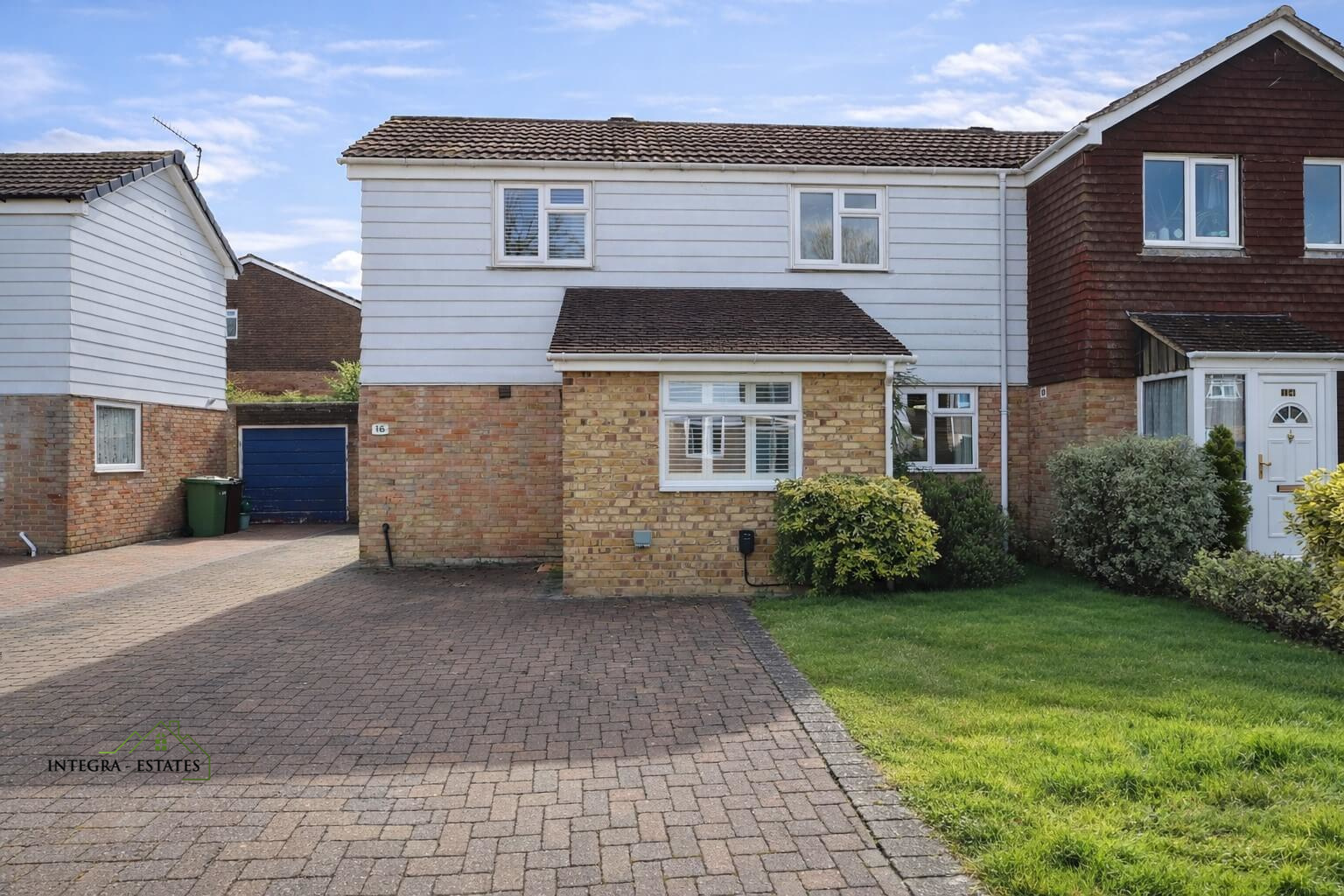
The lead image. The house's answer to the buyer's search: the frontage for a period house, the garden for a family house, the view for a flat with one. Rightmove's data says it is the only image most buyers see first.
Every room, including the small ones, from the doorway at standing height; a standard lens; the wide lens only where the room cannot otherwise be shown and captioned as such.
The road as it is. No cropping out the bus stop, the pylon or the neighbour's extension.
No removal of fixed features in editing. Brightness and straightening, yes; a different sky, no; a removed radiator, never.
Virtual staging labelled on the image, with the empty room shown alongside.
A measured floor plan with the total area stated.
Captions that say what the picture shows, and where a wide lens was used, that it was.
Video where the home suits it, which Rightmove places in the fourth slot of the gallery.
A drone only where the plot or position needs it, by an operator with an Operator ID and insurance, recording from altitude with the camera on the property and not the neighbours.
What a seller does before the shoot
Clear the surfaces, open the curtains, move the cars off the drive, mow, put the bins away, and leave the rooms as a buyer would want to see them rather than as a magazine would. Do not repaint for the photographs; do fix the dripping tap. Tell the photographer which rooms matter most to you and why; they are often the ones the buyer will care about too.
What it costs
Professional photography and a measured floor plan are included in our fee; we do not charge extra for either, and we say in writing before launch if anything is not included.
Frequently asked questions
Do professional photographs really help sell a house? On Rightmove's UK data, listings with five or more photographs get 11% more enquiries, a floor plan adds 12% and video adds 6%. The widely quoted "118% more views" figure is not from any UK or industry-body source and we do not use it.
Can an estate agent edit out the road or a neighbour's extension? No. Propertymark's guidance tells agents not to remove fixed features, and consumer protection law treats a deceptive overall presentation as an unfair commercial practice even where every image is real.
Are drone photographs of my house allowed? Yes, within the CAA's rules (Operator ID, height and distance limits, insurance for commercial use, class marking for new drones since January 2026) and the data protection rules, which mean the camera stays on your property and not your neighbours' gardens.
Who owns the listing photographs? The photographer, or their employer, unless the copyright is assigned. A seller who changes agent cannot assume the new agent can reuse the old photographs; ask what the terms say.
Is virtual staging allowed? Yes, when the image is labelled and the unfurnished room is also shown. Furniture that would not fit, or edits that change the home's condition, are misleading.
About the author
Tom Bailey is the founder and Director of Integra-Estates, an independent estate agency covering South East London and North Kent. To see how we would photograph and present your home before you instruct anyone, call 0203 870 0000.
Rules were checked against the sources below on 14 October 2026. The CAA's drone rules change again on 1 January 2028.
Sources
Rightmove, Create the Ultimate Listing (sales, 2022):
Rightmove, Property Marketing 2020 (two seconds; mobile traffic):
Rightmove, Five things every agent on Rightmove needs to know:
National Association of Realtors, Economists' Outlook (home search research recap):
Propertymark, Assured Advice 19: Property photography:
Propertymark, Assured Advice 40: Use of stock images or artist impressions:
Property Industry Eye, Propertymark on labelling AI-altered images (June 2026):
Digital Markets, Competition and Consumers Act 2024, section 226:
The Property Ombudsman, Code of Practice for Residential Estate Agents (clauses 7i, 7j, 7m, 7n, 7o):
Energy Performance of Buildings (England and Wales) Regulations 2012, regulation 11:
Copyright, Designs and Patents Act 1988, section 11:
Intellectual Property Office, Ownership of copyright works:
Civil Aviation Authority, Open category: introduction to more advanced flying:
Civil Aviation Authority, The Drone and Model Aircraft Code (March 2026):
Civil Aviation Authority, Flying drones for work:
Civil Aviation Authority, Class marks:
Civil Aviation Authority, Remote ID:
Civil Aviation Authority, Privacy rules when flying drones:
Information Commissioner's Office, Video surveillance guidance: unmanned aerial systems (drones):
How much is your property worth?
Get your property valued by a local expert
Get A Valuation


Blogs
Loading photographs…
Let's Talk
If you want to discuss your property, plans for the future, or just want some friendly advice. There'll be no pressure, Just equal measures of common sense and expert advice to point you in the right direction.
Get In Touch