
Culverley Green Estate Agent: SE6 Edwardian Homes Guide 2026
Culverley Green Estate Agent: SE6 Edwardian Homes Guide 2026
Choosing a Culverley Green estate agent is not the same as choosing someone to sell a standard Catford property. This small, distinctive pocket of SE6 has a character of its own, shaped by Edwardian villas, wide tree-lined roads, conservation-area controls, original architectural detail, family houses, converted flats, local schools, transport links and the historic route of Bromley Road.
Culverley Green sits to the south-west of Catford town centre and is one of the area’s clearest examples of a planned early twentieth-century suburb. Lewisham Council describes the Culverley Green Conservation Area as mainly an Edwardian residential suburb built around the turn of the last century, with a grid layout enhanced by wide tree-lined streets. The council also notes the importance of Bromley Road, including shops and the former cinema dating from 1913.
For sellers, that local identity matters. A home on Culverley Road should not be valued in the same way as one on Penerley Road, Bargery Road, Inchmery Road, Arran Road, Newquay Road, Canadian Avenue or Bromley Road. Whole houses, semi-detached villas, converted flats, unmodernised properties, extended family homes and houses with original features all need different pricing and marketing.
This guide explains what makes Culverley Green property special, why buyers search for homes here, and what sellers should understand before asking for a Culverley Green property valuation.
Why Culverley Green Is Different from Ordinary Catford Property
Culverley Green is not just another group of roads near Catford. It is a recognised conservation area with a strong Edwardian identity. Lewisham’s character appraisal says the area’s special interest lies largely in the strong cohesive identity of the first phases of Edwardian development, with houses dating mainly from 1902 to 1914 in the northern part east of Bromley Road.
That word “cohesive” matters. Buyers often notice when a street has rhythm. In Culverley Green, the regular building line, repeated villa forms, front gardens, bay windows, gables and tree-lined roads create a more settled feeling than many mixed residential areas nearby.
The area also has useful variety. Canadian Avenue contains some late Victorian villas. Culverley Road, Penerley Road, Bargery Road and Inchmery Road form the heart of the Edwardian conservation area. Arran Road and Newquay Road were developed slightly later and show a different architectural flavour. Bromley Road has a busier, more commercial edge, with historic route value and a different sales pattern.
For a seller, this means one broad Catford house price cannot do the job. A proper valuation should consider the exact road, house style, floor area, condition, garden, original features, conservation restrictions, transport access, school demand and recent comparable sales.
Generic wording such as “period property in a popular location” is not enough here. The marketing should explain why the road and architecture matter.
The History Behind Culverley Green
The history of Culverley Green is closely tied to Catford’s growth from rural land into a commuter suburb. Lewisham’s appraisal explains that the area remained largely rural for a long time. A 1746 map showed no buildings in the vicinity of the modern conservation area, while by 1843 Sangley Farm and Sangley House were located east of Bromley Road.
Bromley Road played an important early role. It was once the main coach road from London to Kent, and Lewisham notes that its importance stimulated the development of elegant villas along its length. Later, transport improvements became the key driver of Catford’s residential growth. The Lewisham to Beckenham railway line opened in 1857 with a station at Catford Bridge, while the Catford Loop Line opened in 1892 with stations at Catford and Bellingham. Lewisham’s appraisal also records that horse trams in the 1890s helped commuters reach Greenwich and onward trains to London.
This context helps explain why Culverley Green has the feel it does. It was built for a growing commuter population, with homes that offered more space, more greenery and a more ordered residential setting than the inner city.
London Parks & Gardens records that Culverley Road and surrounding streets were laid out as part of an Edwardian suburban development by the Forster family on their Sangley Farm Estate, built piecemeal between 1902 and the 1920s. It also notes that Culverley Green itself was provided as a triangular area of public open space with grass, trees and shrubs.
That small green gives the area its name, but the estate’s appeal is wider than the green alone. It is the combination of roads, houses, trees, history and conservation character that makes buyers remember it.
What Buyers Search for in Culverley Green
Buyers do not always search for this area in one simple way. Some search broadly for houses for sale in Catford or SE6 family homes. Others are more precise and search directly for Culverley Green Conservation Area, Culverley Road, Penerley Road, Inchmery Road, Bargery Road, Arran Road, Newquay Road or Canadian Avenue.
Common buyer and seller searches include:
Culverley Green estate agent
Culverley Green property valuation
Culverley Green houses for sale
Catford conservation area homes
Edwardian houses in Catford
SE6 period homes
Culverley Road house prices
Penerley Road homes
Bargery Road Catford
Inchmery Road SE6
Arran Road houses
Newquay Road Catford
homes near Catford Bridge station
houses near Rushey Green Primary School
houses near Holy Cross Catholic Primary School
what makes Culverley Green different, what affects value here, and how should a seller prepare before going to market?
Road-by-Road Appeal in Culverley Green
A proper Culverley Green valuation should begin with the exact road. The conservation area has a shared identity, but the roads are not identical.
Lewisham’s appraisal identifies three main character areas: Canadian Avenue and Bromley Road including the sports ground, Culverley, Penerley, Bargery and Inchmery Roads, and Arran and Newquay Roads.
Culverley Road
Culverley Road carries the name most directly associated with the area. It is closely connected with the small green at the junction of Culverley Road, Bargery Road and Thornsbeach Road. Lewisham’s appraisal describes the small fenced green at the east end of Culverley Road as the feature from which the conservation area takes its name.
Culverley Road includes period houses, converted homes and properties where condition, tenure and layout can vary widely. Public sold-price data illustrates this point. Rightmove reports an overall average sold price of £344,858 for Culverley Road over the last year, but that figure needs careful interpretation because the sales mix can include flats and converted property, not only whole houses.
For sellers, Culverley Road marketing should explain property type, tenure, layout, original detail, garden access, conversion quality, condition and conservation setting.
A whole Edwardian house should not be priced or described like a converted flat. A flat with a strong lease, private garden or original detail should not be hidden behind broad road averages.
Penerley Road
Penerley Road sits in the heart of the conservation area and is one of the roads where buyers often expect larger Edwardian homes and strong family-house appeal. Lewisham’s appraisal describes Culverley, Penerley, Bargery and Inchmery Roads as the heart of the conservation area, built between 1902 and 1914, with semi-detached villas of similar size and plan form, consistent building line and wide tree-lined streets.
Rightmove reports that Penerley Road had an overall average sold price of £780,000 over the last year.
For sellers, the strongest Penerley Road marketing usually focuses on semi-detached scale, frontage, two-storey bays, original features, garden depth, family layout and any extension or loft potential.
If a home has been well maintained and retains character, the copy should be specific. Buyers care about details such as sash windows, fireplaces, stained glass, timber doors, ceiling height, tiled paths, cellars, loft space and garden outlook.
Bargery Road
Bargery Road is another central Culverley Green road with strong valuation importance. Rightmove reports that Bargery Road had an overall average sold price of £869,583 over the last year, with semi-detached properties averaging £1,128,750 and flats averaging £351,250.
Those figures show why broad averages need caution. A converted flat and a large semi-detached house can sit on the same road but belong to very different buyer searches.
A Bargery Road listing should explain house width, frontage, garden, condition, floor area, original detail, parking arrangements, extension history and conservation paperwork.
Where a home has lost original features, sellers should be realistic. Where features remain, they should be highlighted properly.
Inchmery Road
Inchmery Road is one of the area’s most recognisable Edwardian roads. Lewisham’s appraisal refers to villas on Inchmery Road with features shared across the area, including twin gables, handed windows and doors, symmetrical façades, square two-storey bay windows and decorative detailing.
Rightmove reports that Inchmery Road had an overall average sold price of £858,389 over the last year, with semi-detached properties averaging £1,117,900 and flats averaging £534,000.
For sellers, Inchmery Road deserves architectural detail in the marketing. Buyers searching here may already understand Culverley Green and want a home with strong period presence.
The copy should explain bay windows, roof form, original joinery, garden, room proportions, conversion history if relevant and whether key external features have been retained.
Arran Road
Arran Road belongs to the later part of the conservation area’s development. Lewisham’s appraisal says Arran and Newquay Roads were the last part of the suburb to be developed, with the 1914 Ordnance Survey map showing them still in mid-development. It also describes a different architectural character, including a vernacular theme on Arran Road with false timber framing to the gables and tile-hung bay windows.
Rightmove reports that Arran Road had an overall average sold price of £900,000 over the last year.
For sellers, Arran Road marketing should focus on house scale, later Edwardian character, garden, condition, layout and the difference between original features and later changes.
Because Lewisham’s appraisal records that Arran and Newquay suffered more from unsuitable changes than some other roads, properties that retain original features or have been restored sympathetically may deserve especially careful presentation.
Newquay Road
Newquay Road has a slightly different feel from the earlier central roads. Lewisham’s appraisal states that the houses on Newquay Road allude to the contemporary Old English fashion, with brick and pebble-dash walls and plain tile roofs. It also records that, in survey work, a high proportion of houses on Newquay Road had lost original windows and original façade finish, affecting the area’s character.
For sellers, this means condition and presentation are particularly important. A Newquay Road home with sympathetic windows, good roof materials, retained frontage, restored details or thoughtful improvements should make those strengths clear.
A listing should not simply say “period home”. It should explain whether the property has retained character, modernised layout, garden space, loft potential, planning history and conservation-sensitive improvements.
Canadian Avenue
Canadian Avenue is one of the oldest recognisable residential parts of the area. Lewisham’s appraisal records that Canadian Avenue was formerly Berlin Road, laid out by 1894, and that substantial villas began to spread along Canadian Avenue and Bromley Road during the later 1890s.
The council also notes that 7, 9 and 13 Canadian Avenue are substantial yellow-brick villas with loosely classical detailing and were among the first buildings to signal the area’s development as a residential suburb.
For sellers, Canadian Avenue should be valued with close attention to age, villa type, plot, condition, conversion status and proximity to Bromley Road and the sports ground.
A late Victorian villa, a converted flat and a modern infill property cannot be marketed in the same way.
Bromley Road
Bromley Road is different again. It is busier, older and more mixed. Lewisham describes it as the oldest recognisable feature of the conservation area and once the main coaching route between London and Kent. The council also records that the former cinema opened in 1913 as the Central Picture Hall, with a grand stucco façade and recessed Ionic columns.
Rightmove reports that Bromley Road, SE6 had an overall average sold price of £410,000 over the last year, with flats forming the majority of sales. Detached properties averaged £775,000, while terraced properties averaged £410,000.
For sellers, Bromley Road needs careful positioning. A property here may benefit from visibility, transport and access to Catford town centre, but it may also face buyer questions about traffic, noise and mixed-use surroundings.
The best marketing should be honest about the road while explaining the home’s strengths: space, period detail, access, garden, parking, condition and convenience.
The Architecture Buyers Notice
Culverley Green’s value is closely tied to its architecture. Lewisham says the area’s special interest comes from details such as carved and moulded capitals, window surrounds, terracotta window dressings, sash windows, solid timber doors and stained glass.
In the central roads, the villas are typically two-and-a-half storeys, with twin projecting gables, symmetrical door and window openings, two-storey bay windows, recessed doorways, banding between floors and decorative medieval-style references.
Lewisham also records that the original materials included brick and slate, stone or stucco detailing, timber sash windows, part-glazed timber doors, stained glass, tiled front paths and timber close-boarded front fences.
For buyers, these details are not decoration. They explain why the streets feel special.
For sellers, the marketing should be specific. Instead of relying on phrases such as “period charm” or “full of character”, a strong listing should describe the actual features:
two-storey bay windows
original sash windows
stained glass
solid timber doors
carved capitals
stucco or terracotta detailing
tiled paths
front boundary walls
original fireplaces
loft potential
cellar storage
deep rear garden
sympathetic extension
Specific language helps buyers understand the value before they view.
Conservation Area and Article 4 Direction
Culverley Green was designated a conservation area in 1990. Lewisham states that the area is mainly Edwardian and that its grid layout, tree-lined streets and architectural details give it special interest.
The area also has an Article 4 direction. Lewisham explains that Article 4 directions restrict permitted development rights in certain conservation areas to help preserve high-quality architectural features and ensure changes are carried out sympathetically. The council states that, under an Article 4 direction, external changes to elevations visible from public viewpoints require planning permission.
Lewisham lists examples of works that may require planning permission under Article 4, including changes to windows, doors, chimneys, roof alterations, porches, visible buildings within grounds, hard surfaces such as driveways, boundary treatments, exterior painting and replacement of architectural features.
For sellers, this is crucial. Conservation status can strengthen value because it protects the character buyers like. But it also means buyers may ask for paperwork.
If a property has had replacement windows, roof works, front boundary changes, driveway works, extensions, loft alterations, porch changes, satellite dishes, façade finishes or tree works, sellers should prepare any relevant documents before launch.
Where future potential is mentioned, careful wording is best:
subject to the necessary consents
subject to planning permission
subject to conservation-area requirements
subject to Lewisham Council approval
Overpromising can create problems later. Accuracy builds trust.
House Prices in Culverley Green, Catford and SE6
Public house-price data gives useful context, but it must be read carefully in Culverley Green.
Rightmove reports that Catford has an overall average sold price of £533,394 over the last year, with terraced properties averaging £624,215, flats averaging £349,656 and semi-detached properties averaging £735,805.
Rightmove also reports that SE6 has an overall average sold price of £520,574 over the last year, with terraced properties averaging £597,770, flats averaging £334,185 and semi-detached properties averaging £726,440.
Official borough-level data gives another layer of context. The Office for National Statistics reported that the average house price in Lewisham was £490,000 in March 2026, while home-movers paid an average of £605,000.
These numbers are useful, but they do not replace a proper Culverley Green property valuation. The conservation area contains semi-detached villas, terraces, flats, conversions, older villas, modern infill and mixed-use edge properties. Low transaction volumes on individual roads can also make annual averages swing sharply.
A proper valuation should consider the road, property type, floor area, tenure, lease length where relevant, condition, original features, garden, parking, conservation compliance, extension history, station access, school demand and comparable evidence.
In Culverley Green, the reasoning behind the price matters as much as the number itself.
What Adds Value to a Culverley Green Home?
The strongest value drivers in Culverley Green property are usually period detail, condition, garden, layout, conservation compliance, road position and buyer confidence.
Original features matter because they support the area’s character. Sash windows, stained glass, timber doors, tiled paths, fireplaces, decorative capitals and original boundaries can all make a home feel more authentic.
Condition matters because buyers of older houses often balance affection with caution. Roofs, windows, wiring, heating, damp, drainage, brickwork, guttering, pointing and exterior finishes can all affect confidence.
Garden quality matters because Lewisham’s appraisal repeatedly refers to gardens, tree-lined streets and the suburban character of the area. Substantial rear gardens are part of what separates these homes from more compact city housing.
Layout matters because many buyers want a period home that works for modern life. A strong kitchen-diner, downstairs WC, utility area, home office, cellar, loft conversion or well-planned rear extension can increase appeal.
Paperwork matters because of conservation status and Article 4 controls. A seller who can provide planning permissions, building control sign-off and guarantees reduces buyer anxiety.
Road position matters because Culverley Green has different characters. A house deep in the quieter grid may appeal differently from a Bromley Road property, a Canadian Avenue villa, or a later home on Arran or Newquay.
The best result comes when the home’s character, condition, documentation and marketing story all work together.
Transport and Commuter Demand
Transport has been part of Culverley Green’s story from the beginning. Lewisham’s appraisal links Catford’s growth to the railway and tram improvements of the late nineteenth century, including Catford Bridge, the Catford Loop Line and horse tram access towards Greenwich.
Today, buyers often consider Catford Bridge station, Catford station and Bellingham station, depending on the exact address and daily routine.
Southeastern lists Catford Bridge station at Adenmore Road, Catford, SE6 4RH, with staff availability throughout the week. Thameslink lists Catford station at Ravensbourne Park and describes it as a Category A station with step-free access to all platforms.
Journey time can be a strong buyer trigger. Trainline reports that London Blackfriars to Catford takes around 23 minutes on average, with fastest services around 22 minutes.
Bus routes also support the area. TfL lists bus routes serving Catford and Catford Bridge stations, including routes 75, 171 and 185. London Parks & Gardens lists public transport for Culverley Green as Catford Bridge rail and bus routes including 54, 75, 124, 136, 181, 185, 202, 208 and 284.
For sellers, transport wording should be accurate. Not every home in Culverley Green has the same station walk. Better phrases include:
well placed for Catford Bridge and Catford stations
within reach of rail services towards central London
convenient for Catford town centre and local bus routes
suited to buyers balancing Edwardian character with London commuting
Accuracy matters. Buyers will check the route themselves.
Schools and Family Buyer Demand
Family buyers are a major part of the Culverley Green property market. Many are looking for period houses, gardens, transport, local schools and a settled residential feel.
Rushey Green Primary School is located on Culverley Road, and Ofsted records its inspection outcome from 22 November 2022 as Good.
Holy Cross Catholic Primary School is also on Culverley Road, and Ofsted lists it as Outstanding. The school’s own reports page states that it was inspected by Ofsted in May 2023 and graded Outstanding.
Nearby Rathfern Primary School is listed by Ofsted as Outstanding, with its latest report shown from 17 November 2021.
School references should always be handled carefully. It is fair to say that buyers often consider nearby schools. It is not wise to imply guaranteed admission. Catchments, admissions criteria, faith criteria and school performance information can change, so buyers should check directly with the relevant school or local authority.
For sellers, the family message should focus on daily life: school journeys, garden use, storage, home working, station access, room sizes and long-term flexibility.
Culverley Green, Open Space and Local Lifestyle
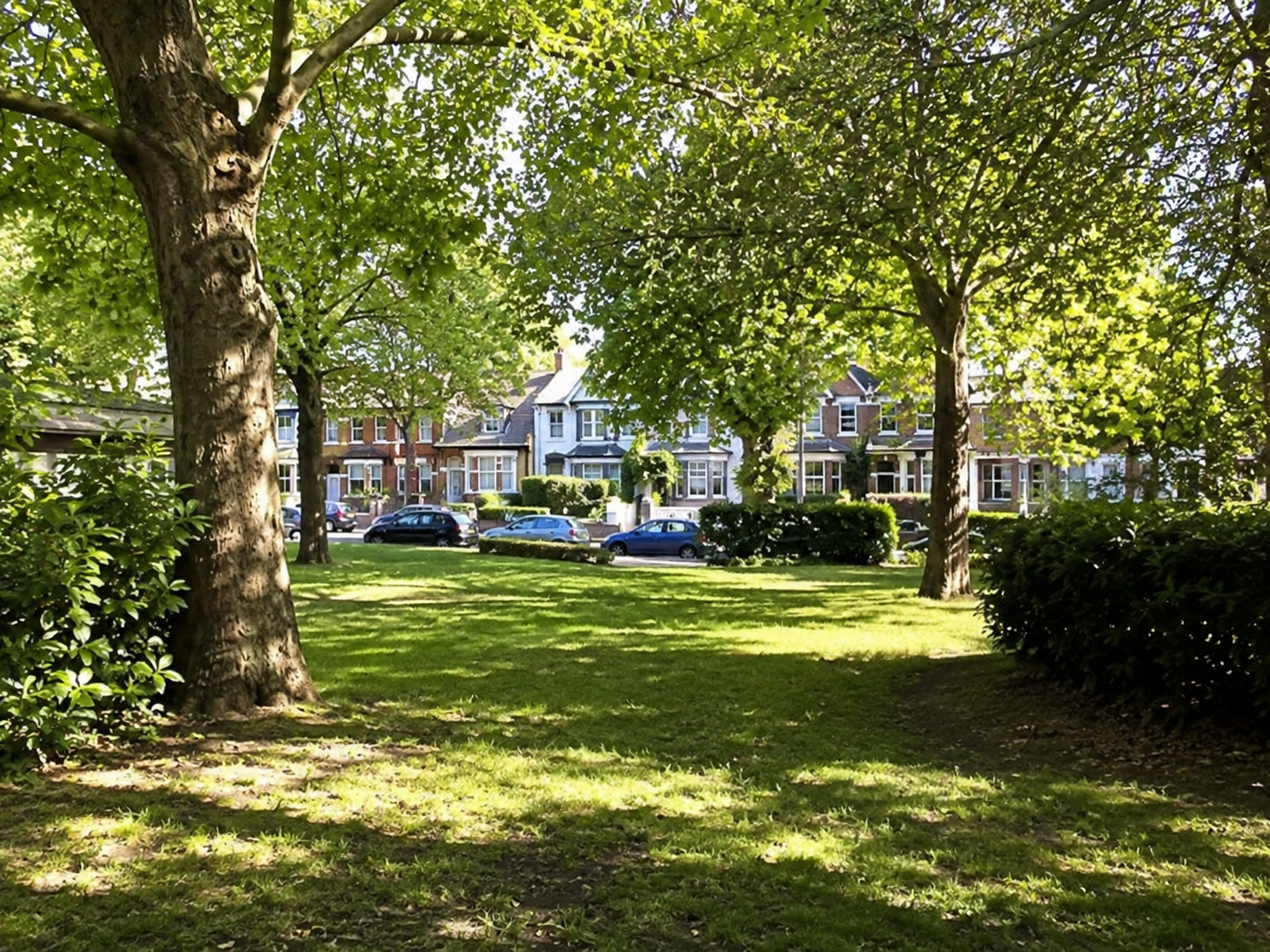
The small green itself gives the area an identity. London Parks & Gardens describes Culverley Green as a triangular public open space with grass, trees and shrubs, located at Culverley Road, Bargery Road and Thornsbeach Road. It also records that the site is protected under the London Squares Preservation Act 1931.
Lewisham’s appraisal also says trees, gardens and open spaces are important to the impression of a comfortable Edwardian suburb and a peaceful domestic haven.
The area also sits close to the wider Catford town centre. Lewisham’s Catford Town Centre Framework sets out a long-term vision for new homes, shops, public space, a rerouted South Circular, better walking and cycling infrastructure, and a greener town centre.
For buyers, this means Culverley Green offers a rare mix: conservation-area streets, period homes, schools, transport, a small historic green and access to Catford’s changing town centre.
For sellers, the lifestyle story should be grounded and honest. The value is not just in the house. It is in the way the home connects to roads, schools, stations, shops, green space and community identity.
How to Prepare a Culverley Green Home for Valuation
A Culverley Green property valuation should be prepared carefully. Buyers in conservation areas often look closely at detail, especially where homes are older, converted, extended or altered.
Start with the frontage. The front garden, boundary wall, gate, path, bay windows, door, roof, brickwork and decorative details all contribute to first impressions. In Culverley Green, these features are part of the conservation-area character, not just presentation.
Prepare the garden. Many buyers are drawn to SE6 because they want more outside space. Cut back overgrown planting, clear old furniture, define seating areas and show how the garden connects to the house.
Inside, focus on light, proportion and flow. Period homes should show their room sizes clearly. Bay windows should not be blocked. Fireplaces, stained glass, doors, floors and staircases should be visible where they add value.
Prepare paperwork early. Useful documents may include:
planning permissions
building control certificates
completion certificates
Article 4-related permissions where relevant
conservation-area consents
roof records
window guarantees
boiler service history
electrical certificates
damp or structural reports
lease or share-of-freehold documents for flats
service-charge and maintenance information
documents for extensions, loft conversions or garden buildings
Good paperwork reduces doubt. Reduced doubt can help protect the sale once a buyer is found.
Common Mistakes Culverley Green Sellers Should Avoid
One common mistake is relying only on the Culverley Green name. The area has strong appeal, but buyers still compare value carefully.
Another mistake is using broad Catford or SE6 averages to set the price. Culverley Green needs road-level and property-specific judgement.
A third mistake is underplaying original features. If a home retains sash windows, stained glass, fireplaces, timber doors, carved detailing, terracotta dressings, tiled paths or original front boundaries, those details should be brought into the story.
Some sellers fail to prepare conservation paperwork. This can slow a sale later, especially where windows, roofs, front walls, driveways, porches, extensions or loft works have changed.
Another mistake is overstating future potential. In an Article 4 conservation area, potential should always be described carefully and factually.
Poor photography can also weaken a launch. Culverley Green homes need photography that explains the frontage, road setting, period detail, room proportions, garden, light and condition.
Finally, sellers should avoid generic copy. A listing should explain why this specific road, house style and conservation setting matter.
What Should a Proper Culverley Green Valuation Include?
A proper Culverley Green valuation should look at the whole property, not just recent sales.
It should consider the exact road and which character area the home sits within.
It should assess property type, floor area, condition, layout, original features, garden depth, frontage, parking and road setting.
It should review planning history, conservation requirements, Article 4 considerations, window changes, roof works, tree works and building-control documents.
It should examine tenure, lease length, share-of-freehold status and service-charge arrangements where the property is a flat or maisonette.
It should compare recent sales carefully, giving more weight to homes that match the subject property by road, type, size, condition, garden, tenure, presentation and conservation status.
It should also identify the likely buyer. A Culverley Green home may appeal to a family moving within Catford, a buyer stepping up from a flat, a commuter looking near Catford Bridge, someone comparing Hither Green and Ladywell, or a period-home buyer who values conservation-area character.
Most importantly, the valuation should explain the reasoning. A seller should understand not only the suggested price, but why that price is realistic and how the marketing will support it.
FAQs About Selling in Culverley Green
What is Culverley Green?
Culverley Green is a conservation area in Catford, SE6. Lewisham Council describes it as mainly an Edwardian residential suburb built around the turn of the last century, with wide tree-lined streets and a grid layout.
When was Culverley Green designated a conservation area?
Culverley Green was designated a conservation area in 1990. Lewisham Council states that its special character comes from its Edwardian suburb layout, tree-lined streets and architectural detail.
Which roads are in the Culverley Green Conservation Area?
Important roads include Culverley Road, Penerley Road, Bargery Road, Inchmery Road, Arran Road, Newquay Road, Canadian Avenue and Bromley Road. Lewisham’s appraisal also identifies character areas covering Canadian Avenue and Bromley Road, Culverley/Penerley/Bargery/Inchmery Roads, and Arran/Newquay Roads.
What type of homes are common in Culverley Green?
Culverley Green is known for Edwardian semi-detached villas, period terraces, late Victorian villas, converted flats and some later infill property. The central roads contain many semi-detached villas with twin gables, bay windows, decorative detailing and substantial rear gardens.
Does the Article 4 direction affect selling a Culverley Green home?
It can. Lewisham states that Article 4 directions restrict permitted development rights in certain conservation areas, meaning external changes visible from public viewpoints may require planning permission. Sellers should prepare paperwork for relevant changes to windows, roofs, doors, front boundaries, driveways, porches, chimneys or other visible features.
What adds value to a Culverley Green home?
The strongest value drivers are usually road position, house type, original features, condition, garden depth, conservation compliance, layout, extension quality, tenure clarity, school demand and station access.
Which stations do Culverley Green buyers use?
Many buyers consider Catford Bridge, Catford and sometimes Bellingham, depending on the exact road. Catford Bridge is listed by Southeastern at Adenmore Road, while Catford station is listed by Thameslink at Ravensbourne Park.
Are schools important to Culverley Green buyers?
Yes. Family buyers often consider nearby schools including Rushey Green Primary School, Holy Cross Catholic Primary School and Rathfern Primary School, while checking admissions arrangements directly with the relevant school or local authority.
Should I rely on an online valuation for a Culverley Green home?
An online valuation can give a rough starting point, but it cannot properly judge Edwardian detail, road position, conservation requirements, Article 4 controls, garden depth, original features, conversion quality, tenure, buyer demand and comparable evidence for a specific Culverley Green property.
What should I prepare before a Culverley Green valuation?
Prepare documents for planning, building control, conservation matters, Article 4-related works, windows, roofs, extensions, tree works, heating, electrics, damp reports, guarantees and lease documents where relevant. Then review the home as a buyer would: frontage, entrance, light, layout, period features, garden and general condition.
Conclusion
Culverley Green is one of Catford’s most distinctive residential pockets. Its appeal comes from more than period houses alone. It comes from Edwardian architecture, conservation-area status, tree-lined streets, original detailing, front gardens, substantial rear gardens, Catford transport links, local schools and a clear neighbourhood identity.
For sellers, that means valuation and marketing need to be precise. A Culverley Green home should not be reduced to bedroom count and floor area. The right campaign should explain the road, the house style, the frontage, the garden, the condition, the conservation position, the school and transport context, and the reason buyers search for this area by name.
A strong launch starts with proper local understanding. Before setting an asking price, make sure the valuation looks beyond the obvious and considers the details that Culverley Green buyers truly care about.
Thinking of selling a Culverley Green home? Ask for a road-by-road valuation that considers your property’s setting, Edwardian character, condition, garden, conservation position, Article 4 requirements, school appeal, station access and recent comparable sales.
Contact Integra-Estates at 0203 870 00 00
How much is your property worth?
Get your property valued by a local expert
Get A Valuation
-1.png)
.jpg)
.jpg)
.jpg)

Blogs
Loading photographs…
Let's Talk
If you want to discuss your property, plans for the future, or just want some friendly advice. There'll be no pressure, Just equal measures of common sense and expert advice to point you in the right direction.
Get In Touch