
Keston Park Estate Agent: Private Bromley Estates Guide 2026
Keston Park Estate Agent: Private Bromley Estates Guide 2026
Choosing a Keston Park estate agent is not the same as choosing someone to sell an ordinary detached house in Bromley. This is one of the area’s most distinctive private residential settings, and a proper valuation needs to look beyond bedroom count, square footage and a few recent sold prices.
Keston Park is known for private roads, large detached homes, mature gardens, wide plots, woodland, security, conservation-area status and a rare sense of privacy. It sits in the wider Keston, Bromley, Farnborough and Orpington property market, with individual addresses appearing across BR2 and BR6, while many buyers also compare it with nearby Chislehurst BR7, Petts Wood, Hayes, Locksbottom and Bromley South.
For sellers, that matters. A house on Forest Drive may need a different strategy from one on Forest Ridge, Ninhams Wood, Longdon Wood, Pine Glade, Beech Dell, Mark Close or Holwood Park Avenue. The road, plot, privacy, garden, house style, planning history, conservation setting and buyer profile can all influence value.
This guide explains what makes Keston Park property different, why buyers search for homes here, and what sellers should understand before asking for a Keston Park property valuation.
Why Keston Park Is Different from Ordinary Bromley Property
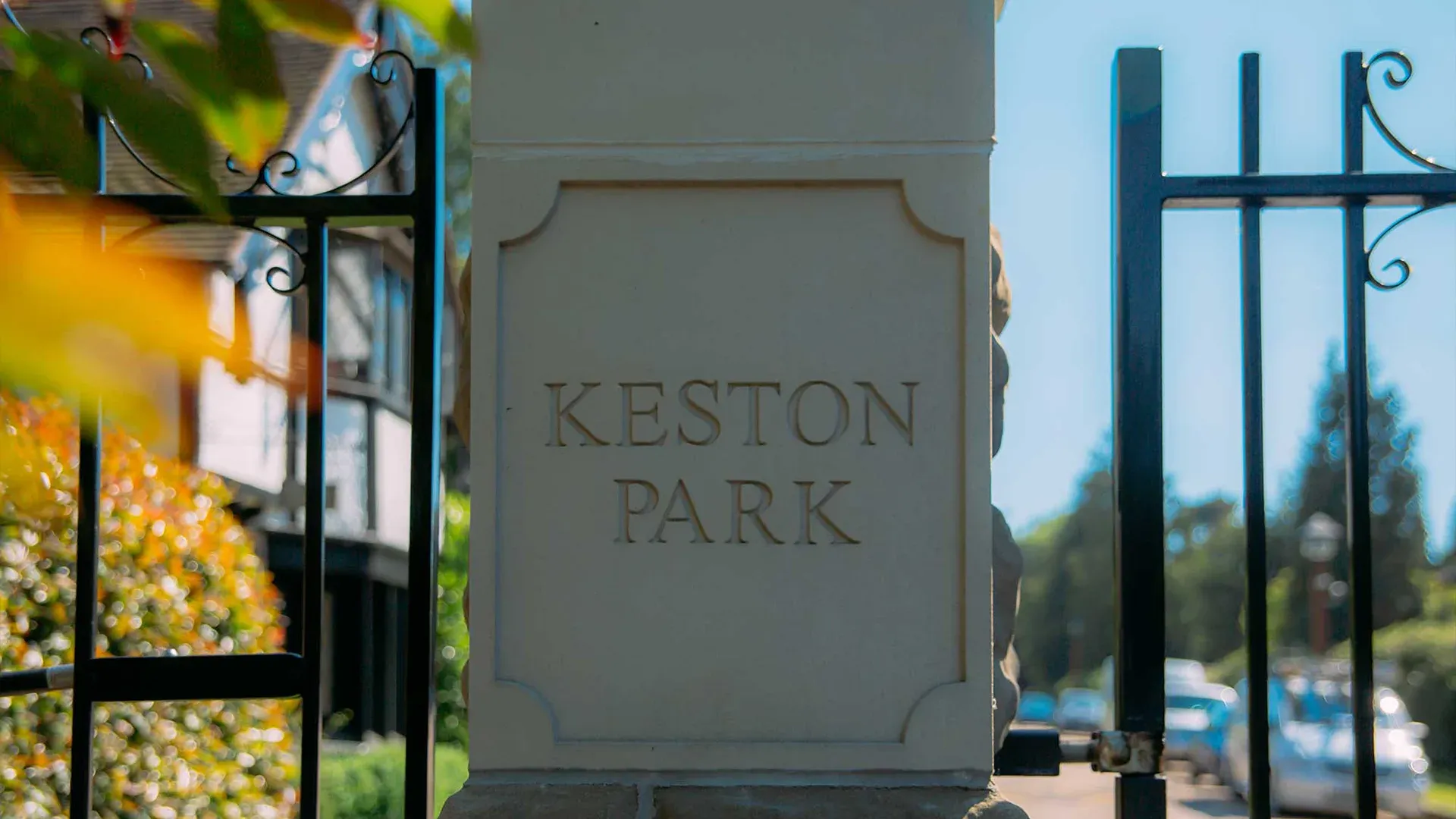
Keston Park has a clear private-estate identity. The official Keston Park website states that the Park extends over 140 acres, includes over 200 residential properties, has seven private roads and contains two large areas of woodland. It also describes wide roads, leafy verges, gated entrances, original street lamps and heritage-style road signs as part of the estate’s character.
This is important because buyers are not only buying a house. They are buying into a particular setting. The approach through the estate, the trees, the road surface, the boundaries, the spacing between houses and the privacy all influence how a buyer feels before stepping inside.
A strong Keston Park valuation should therefore begin with the estate setting. It should consider the road, plot size, frontage, garden depth, privacy, house condition, planning history, woodland setting, security, architectural style and recent comparable sales.
A generic description such as “large detached house in a sought-after location” is not enough here. Keston Park homes need more intelligent marketing because buyers at this level are not just comparing rooms. They are comparing lifestyle, privacy, land, condition, setting and long-term value.
The History Behind Keston Park
The story of Keston Park is tied to the older Holwood House Estate. The Keston Park history page records that the original Holwood House was sold in 1785 to William Pitt, Prime Minister of Great Britain, and that John Ward later took ownership in 1823 before rebuilding the house in the Greek Revival style. It also records that on 9 January 1923, the Earl of Derby sold 143 acres of land known as the Keston Lodge Estate to property developer Frederick Rogers, who renamed it Keston Park.
This history gives the estate much of its depth. Keston Park was not designed as a dense suburban layout. Its appeal came from large individual homes set at low density within a wooded and parkland landscape.
A planning heritage report also describes Keston Park’s origins in the Holwood House Estate, noting that development was driven by Frederick and Eric Rogers and that their approach was to build large houses at low density within a woodland and parkland setting. The same report says the landscape is the dominant characteristic of the conservation area, with diverse house types and each plot feeling individual while still being part of the wider parkland setting.
That remains true today. The strongest homes in Keston Park are often valued not only for their internal space, but for how they sit within their plot.
The Private Estate Character Buyers Notice First
Buyers often notice the private estate feel before they study the floorplan. The official estate website describes Keston Park as an exclusive and gated neighbourhood, with peace, security and space close to London. It also says the estate has a private security system, manned guarding and CCTV cameras monitored 24/7.
The visitors’ page also makes clear that Keston Park is private property and that entry is only permitted to authorised visitors. It refers to CCTV, ANPR cameras and a 20mph speed limit once entry is approved.
For sellers, this should be handled carefully. Security and privacy are part of the appeal, but property marketing should remain tasteful and factual. A listing should not overstate exclusivity in a way that feels boastful. It should simply explain the setting clearly.
Good wording might focus on private road position, established boundaries, mature trees, controlled access, generous frontage, driveway parking and a peaceful estate environment.
At this level of the market, buyers want confidence. They want to feel the home is private, secure, well maintained and properly documented.
Road-by-Road Appeal in Keston Park
A proper Keston Park valuation should start with the exact road. The estate has a strong overall identity, but each road has its own feel, plot pattern and buyer appeal.
The official Keston Park address brochure lists the Park as comprising Ninhams Wood, Longdon Wood, Forest Drive, Forest Ridge, Beech Dell, Mark Close, Pine Glade and Holwood Park Avenue.
Forest Drive
Forest Drive is one of the most recognised Keston Park roads. It is closely linked with the estate’s gated entrance and private setting. Buyers searching this road are often looking for large detached homes, mature plots, privacy and access to the wider Keston and Bromley area.
A Forest Drive listing should explain the frontage, driveway, room layout, garden depth, privacy, condition and any planning history. If the house has been extended, rebuilt or substantially remodelled, sellers should prepare all planning and building-control paperwork before launch.
Forest Ridge
Forest Ridge has strong name recognition and a clear connection to the estate’s wooded character. Public sold-price records show high-value detached transactions on Forest Ridge, including substantial sales in recent years.
For sellers, Forest Ridge marketing should focus on plot, privacy, house scale, garden setting and architectural presence. Buyers here may be especially interested in how the home sits within the landscape.
Ninhams Wood
Ninhams Wood is one of the key Keston Park road names and reinforces the estate’s woodland identity. The official Keston Park website refers to Lake Wood and Ninhams Wood as private woods within the estate, containing mature and protected trees.
Homes on Ninhams Wood should be marketed around privacy, mature boundaries, garden outlook, frontage and family flexibility. If a property has a large garden, swimming pool, leisure space, outbuilding or annexe potential, these points should be described clearly and factually.
Longdon Wood
Longdon Wood is another important Keston Park address. Public sold-price records show detached transactions on Longdon Wood at significant levels, including examples above £3 million in recent data.
For sellers, the key is to explain the exact property rather than rely on the road name alone. Buyers will want to understand plot size, privacy, condition, garden, internal flow, parking, garaging and any approved works.
Pine Glade
Pine Glade carries a softer, landscape-led feel. It is often associated with larger detached homes and strong garden settings. Public sold-price records show a detached property on Pine Glade selling for £5.1 million in October 2025, which shows the level of value that can be achieved for the right home in the right setting.
A Pine Glade listing should focus on setting, design, garden connection, privacy, room flow and condition. If the home blends older character with modern upgrades, that balance should be brought out in the copy.
Holwood Park Avenue
Holwood Park Avenue is deeply connected to the estate’s wider history. Its name reflects the link with the Holwood House Estate, and public sold-price records show major detached transactions along Holwood Park Avenue.
Marketing a home here should include historical context, road setting, plot quality, garden, architecture and planning position. Buyers may be comparing these homes with other high-value properties across Keston, Bromley, Farnborough, Chislehurst and Orpington.
Beech Dell and Mark Close
Beech Dell and Mark Close form part of the official Keston Park road structure. These roads may appeal to buyers looking for the private-estate lifestyle in a quieter or more tucked-away setting.
For sellers, the focus should be on privacy, plot usability, approach, parking, garden quality and how the house functions for modern family life.
Keston Park Conservation Area and Planning Considerations
Keston Park is a conservation area. Planning Data records Keston Park, Farnborough as a conservation area within the London Borough of Bromley, with a start date of 1 January 1989.
Bromley Council explains that conservation areas are designated because of special architectural or historic interest, and that designation aims to protect character and appearance by managing change sympathetically.
For sellers, this matters for two reasons.
First, conservation status supports value because it helps protect the qualities buyers like: trees, gardens, low density, road character, mature landscaping and individual homes.
Second, it makes paperwork more important. If a property has been extended, altered, rebuilt, had windows changed, had tree works, had boundary changes or had major landscaping, buyers may ask for relevant permissions and approvals.
A heritage report on Keston Park notes that the area’s significance lies partly in its connection with the Holwood House Estate and in the way the Rogers family incorporated the Holwood Park landscape into a high-quality built environment of large private homes. It also refers to the importance of the strong landscape framework, tree and shrub planting, driveways and low-density wooded character.
That is exactly why future potential should be described carefully. Sellers should avoid saying a property “can be extended” unless they have evidence. Better wording is “subject to the necessary consents” or “subject to planning and conservation requirements”.
Covenants, Estate Management and Buyer Confidence
Keston Park is not only controlled by normal planning considerations. The official estate website says the Park still follows original covenants from its 1920s conception, designed to safeguard against overdevelopment and preserve green, open space. It also says development is expected to be fully approved, use high standards of design and materials, minimise disturbance to the land and complement the surroundings.
For sellers, this is a serious point. If a home has been changed significantly, buyers may want clarity not only on council planning and building control, but also on estate-related approvals or compliance.
Before going to market, sellers should gather:
planning permissions
building control certificates
completion certificates
tree-work approvals
estate approvals where relevant
covenant information
guarantees for windows, roofs, damp works or structural works
electrical and heating documents
documents for outbuildings, pools, annexes or major landscaping
This kind of preparation can make the sale smoother. In a high-value private estate, uncertainty can cost time and confidence.
The Age, Style and Architecture of Keston Park Homes
Keston Park’s residential development began in the 1920s, but the estate now contains a wide range of homes. The official estate website says residences range from original 1920s homes through to ultra-modern dwellings with high standards of design, technology and sustainability.
That variety is part of the estate’s appeal. Some buyers want original character: pitched roofs, timber details, leaded windows, fireplaces, panelled halls or traditional proportions. Others want a modern family home with open-plan living, cinema room, gym, home office, smart technology, energy upgrades and a strong indoor-outdoor connection.
A good valuation should not treat all Keston Park houses as the same. A 1920s home with original character, a modern rebuilt mansion, a partly dated detached house, and a newly refurbished family home may all attract different buyers.
The strongest homes usually combine privacy, plot quality, architectural presence, condition, garden and practical layout.
Buyers will look carefully at:
frontage and arrival
driveway and parking
garage space
entrance hall
reception room flow
kitchen and family space
principal bedroom suite
guest accommodation
home office space
garden privacy
outbuildings or leisure areas
energy performance
security
planning history
A listing should explain how the house works in real life, not just how large it is.
House Prices in Keston Park and the Wider Bromley Market
Public price data shows why careful valuation matters. Rightmove reports that Keston Park had an overall average sold price of £2,261,429 over the last year, with detached properties averaging £2,567,500. It also notes that prices were lower than the previous year and below the 2022 peak, which is important context when setting a realistic asking price.
Wider Keston data is lower. Rightmove reports an overall average sold price of £1,026,671 for Keston over the last year, with detached homes averaging £1,367,675.
Official borough-level data gives another layer of context. The Office for National Statistics reported a provisional average house price of £518,000 in Bromley in March 2026, with detached properties averaging £1,075,000.
These figures are useful, but they are not enough on their own. A Keston Park valuation should not be based only on a broad Bromley or Keston average. The estate has very low transaction volume, and individual homes can vary widely by plot, condition, road and specification.
A proper valuation should consider road position, plot size, floor area, garden, privacy, condition, planning history, conservation setting, estate controls, security, buyer profile and recent comparable evidence.
What Adds Value to a Keston Park Home?
The strongest value drivers in Keston Park property are usually plot, privacy, road position, presentation, planning clarity and buyer confidence.
Plot size is one of the most important factors. Buyers often search here because they want space: a wide frontage, large garden, mature boundary, long driveway, garage block, leisure building or scope for multi-generational living.
Privacy matters. A home that feels secluded, secure and calm can attract buyers who are moving from busier or more overlooked locations.
Road position matters too. Buyers will judge the approach, the relationship with neighbouring homes, the feel of the road and the distance from entrances.
Architecture adds emotional value. A well-balanced frontage, strong roofline, attractive windows, good entrance and sympathetic materials all affect the first impression.
Condition is vital. Buyers at this level will look closely at roofs, windows, heating, wiring, insulation, drainage, bathrooms, kitchens, exterior maintenance, gates and security systems.
Planning clarity can make a difference. A seller who can produce the right permissions, certificates and approvals gives buyers fewer reasons to worry.
Garden quality is often decisive. A large garden should be understandable, usable and well presented. Buyers will look at orientation, privacy, landscaping, terraces, children’s space, entertaining areas, trees and maintenance.
A large house can still underperform if the layout feels awkward, the garden is hard to understand, or the paperwork is unclear. A slightly smaller home can do very well if it is beautifully presented, private, well maintained and easy for buyers to trust.
Transport and Commuter Demand
Keston Park offers privacy and space, but buyers still want practical access to London and the wider south-east.
The official estate website refers to nearby stations including Hayes, Orpington and Bromley South for access to major London stations.
Hayes station is listed by Southeastern at Station Approach, Hayes, BR2 7EN. Southeastern live departure information shows services towards London Charing Cross, London Cannon Street and other London destinations via Lewisham.
Trainline reports that Hayes (Kent) to London Bridge takes around 34 minutes on average, with the fastest services taking around 31 minutes.
Bus access also matters. TfL’s route 146 runs between Bromley North Station and Downe Church, serving the Keston direction.
For sellers, transport wording should be accurate. Keston Park is a private estate, and access varies by road. A home deep inside the estate will not have the same practical station access as one closer to an entrance. Better wording is usually “well placed for Hayes, Orpington and Bromley South stations by car”, “convenient for Keston, Locksbottom and Bromley”, or “within reach of London rail links from Hayes and Orpington”, depending on the exact address.
Schools and Family Buyer Demand
Family demand is one of the main forces behind the Keston Park property market. Buyers often look here because they want large homes, privacy, gardens, parking, security, home-working space and access to schools.
Keston Church of England Primary School is on Lakes Road, Keston, and Ofsted records its January 2024 inspection outcome as Good.
Hayes School, on West Common Road, Hayes, is listed by Ofsted with an overall inspection outcome of Outstanding from September 2022.
Newstead Wood School, on Avebury Road in Orpington, is listed by Ofsted with an overall inspection outcome of Outstanding from February 2022.
School references should always be handled carefully in property marketing. It is fair to say buyers often consider nearby schools, but no listing should suggest guaranteed admission. Catchments, admissions criteria and selective-school arrangements can change, and buyers should check directly with the school or local authority.
For sellers, the family message should focus on daily life: school journeys, garden use, parking, work-from-home space, guest rooms, storage, security and long-term flexibility.
Keston Common, Holwood and Local Lifestyle
Keston Park’s appeal is strengthened by the surrounding landscape. Keston Common is listed by Bromley Council as open common and woodland at Fishponds Road and Heathfield Road, with habitats including wetlands, heathland, acid grassland and woodland.
The nearby Holwood landscape also adds historical depth. Historic England states that Holwood is Grade I listed and that the house rebuilt between 1823 and 1826 was designed by Decimus Burton for John Ward.
The Keston Park history page also records the association of Holwood with William Pitt and William Wilberforce, including the famous discussion connected with the abolition of slavery near what is remembered as the Wilberforce Oak.
For buyers, these details help shape the area’s identity. Keston Park is not just a private estate with large houses. It sits within a landscape of woodland, historic estates, commons and village life.
That matters because many buyers are looking for something rare: space and privacy without feeling disconnected from London.
How to Prepare a Keston Park Home for Valuation
A Keston Park property valuation should be prepared carefully. These homes are often high-value assets, and buyers will normally carry out detailed due diligence.
Start with the approach. Frontage matters. Gates, driveway, lighting, planting, boundary treatment, garage doors, exterior paintwork, roofline and entrance all shape the first impression.
Prepare the garden. A large plot should be clear, tidy and easy to understand. Cut back overgrown areas, define terraces or seating spaces, tidy paths, clear old furniture and make sure the connection between the house and garden is visible.
Inside, focus on flow. Large homes can feel confusing if rooms are not presented clearly. Reception rooms, studies, gyms, playrooms, guest suites, utility spaces and leisure rooms should each have a clear purpose.
Prepare paperwork early. This is especially important in Keston Park because of the conservation setting and estate controls.
Useful documents may include:
planning permissions
building control certificates
estate approval documents
tree-work permissions
completion certificates
guarantees
boiler and heating records
electrical certificates
roof reports
window information
drainage records
pool or outbuilding documents
security-system details
A well-prepared seller gives buyers fewer reasons to hesitate.
Common Mistakes Keston Park Sellers Should Avoid
One common mistake is relying too heavily on the Keston Park name. The estate is highly desirable, but buyers still compare value carefully.
Another mistake is using broad postcode averages. BR2, BR6, BR7, Bromley and Keston averages cannot properly value a specific private-estate home.
A third mistake is underplaying the plot. In Keston Park, land, privacy, frontage and garden quality can be just as important as internal floor area.
Some sellers fail to prepare planning and estate paperwork. This can slow a sale later, especially if the property has been extended, rebuilt or altered.
Another mistake is overstating future potential. Conservation status and estate covenants mean sellers should use careful wording and avoid promises that are not supported by evidence.
Poor photography is also a risk. A large private-estate home needs photography that explains the approach, frontage, room flow, garden, privacy and setting. It should look its best without feeling misleading.
Finally, sellers should avoid generic copy. A Keston Park listing should explain why the estate matters and why the specific home stands out within it.
What Should a Proper Keston Park Valuation Include?
A proper Keston Park valuation should look at the whole property, not just the last few sales.
It should consider the exact road and the home’s position within the estate.
It should assess plot size, frontage, garden depth, privacy, driveway, parking, garaging and orientation.
It should review house size, architectural character, condition, layout and presentation.
It should examine planning history, estate approvals, conservation requirements, tree-work records and covenants.
It should compare recent sales carefully, giving more weight to homes that match the subject property by road, plot, size, condition, setting and specification.
It should also identify the likely buyer. A Keston Park home may appeal to a family moving within Bromley, a buyer comparing Chislehurst BR7, someone upsizing from Hayes, Petts Wood or Orpington, or a London buyer looking for more privacy, land and security.
Most importantly, the valuation should explain the reasoning. A seller should understand not only the suggested price, but why that price is realistic and how the marketing will support it.
FAQs About Selling in Keston Park
Is Keston Park in BR2 or BR6?
Keston Park is associated with the Keston and Bromley area, and individual property records show addresses across both BR2 and BR6 depending on the road. Buyers may also compare the estate with nearby Chislehurst BR7, Orpington BR6, Hayes, Farnborough and Bromley.
Is Keston Park a private estate?
Yes. Keston Park is a private residential estate with gated access, private roads, security and estate management. The official website describes it as extending over 140 acres with over 200 residential properties and seven private roads.
When was Keston Park founded?
Keston Park was founded in 1923 by Frederick Rogers. The estate’s history records that Rogers bought 143 acres of the Keston Lodge Estate on 9 January 1923 and renamed it Keston Park.
Is Keston Park a conservation area?
Yes. Planning Data records Keston Park, Farnborough as a conservation area in the London Borough of Bromley, with a start date of 1 January 1989.
Which roads are in Keston Park?
Roads associated with Keston Park include Ninhams Wood, Longdon Wood, Forest Drive, Forest Ridge, Beech Dell, Mark Close, Pine Glade and Holwood Park Avenue.
What type of homes are common in Keston Park?
Keston Park is best known for large detached homes, many with wide plots, private driveways, mature gardens, garages and strong privacy. The estate includes original 1920s homes as well as modern and substantially remodelled properties.
What adds the most value to a Keston Park home?
The strongest value drivers are usually plot size, privacy, road position, garden quality, condition, planning clarity, estate approvals, conservation setting, parking and buyer confidence.
Which stations do Keston Park buyers use?
Buyers may consider Hayes, Orpington and Bromley South, depending on the exact road and personal routine. Hayes station has services towards central London, and Trainline reports Hayes to London Bridge journey times from around 31 minutes on the fastest services.
Are schools important to Keston Park buyers?
Yes. Family buyers often consider nearby schools, including Keston Church of England Primary School, Hayes School and Newstead Wood School, while checking admissions arrangements directly with the relevant school or local authority.
Should I rely on an online valuation for a Keston Park home?
An online valuation can provide a rough starting point, but it cannot properly judge plot quality, privacy, conservation status, estate controls, garden value, planning history, buyer demand and comparable evidence for a specific Keston Park property.
What should I prepare before a Keston Park valuation?
Prepare documents for planning, building control, estate approvals, tree works, extensions, roof works, windows, heating, electrics, drainage, guarantees and outbuildings. Then review the home as a buyer would: approach, frontage, entrance, layout, light, garden, privacy and overall condition.
Conclusion
Keston Park is one of Bromley’s most distinctive private residential estates. Its appeal comes from more than large houses. It comes from privacy, woodland, gardens, history, conservation status, estate management, low-density housing, security and a feeling of space that buyers remember.
For sellers, that means valuation and marketing need to be precise. A Keston Park home should not be reduced to bedroom count and floor area. The right campaign should explain the road, the plot, the frontage, the garden, the condition, the estate setting, the planning position, the security, the school and transport context, and the reason buyers search for this private estate by name.
A strong launch starts with proper local understanding. Before setting an asking price, make sure the valuation looks beyond the obvious and considers the details that Keston Park buyers truly care about.
Thinking of selling a Keston Park home? Ask for a road-by-road valuation that considers your property’s setting, plot, privacy, architecture, condition, garden, conservation position, estate approvals, school appeal, transport access and recent comparable sales.
Contact us at 0203 870 00 00
E-mail [email protected]
How much is your property worth?
Get your property valued by a local expert
Get A Valuation
-1.png)
.jpg)
.jpg)
.jpg)

Blogs
Loading photographs…
Let's Talk
If you want to discuss your property, plans for the future, or just want some friendly advice. There'll be no pressure, Just equal measures of common sense and expert advice to point you in the right direction.
Get In Touch