
Park Langley Conservation Area: A Homeowner's Guide
Park Langley Conservation Area: A Homeowner's Guide
Buying or selling a characterful Park Langley home can bring several planning questions together. Is the property inside the conservation area? Is it within an Area of Special Residential Character? Does an Article 4 direction apply, and what work does it cover?
Those questions are related, but they are not interchangeable. A neighbourhood name is not a planning search. The right starting point is the exact property, the relevant boundary and the work being considered.
Is all of Park Langley covered by the same designation?
Do not assume so. Bromley's conservation information and mapping should be used to check the property. The council also publishes separate material for the Park Langley Area of Special Residential Character and associated Article 4 directions.
An Area of Special Residential Character is a separate local planning designation, not another name for the conservation area. Do not assume the boundaries or relevant controls are identical.
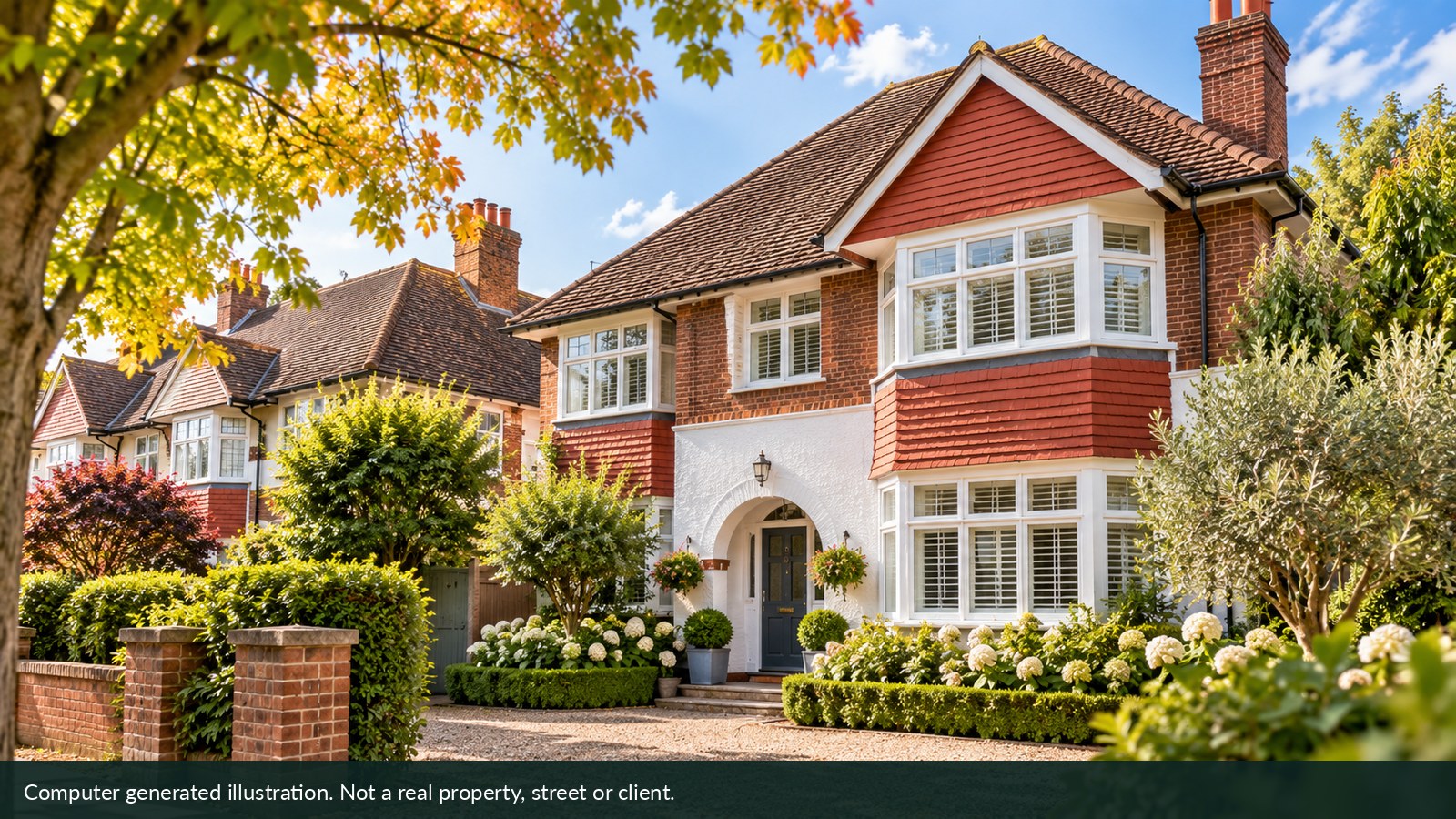
The distinction matters in practice. A May 2025 Planning Inspectorate decision discusses a property at the junction of Wickham Way and Hayes Way within the Park Langley Conservation Area. It describes the contribution made by the relationship between houses, landscaped front gardens and the spaces between buildings.
That decision is useful evidence about a particular proposal and setting. It is not permission for a similar extension elsewhere, nor a substitute for checking another address.
What does conservation area status mean for an owner?
Conservation designation concerns an area's special architectural or historic interest and the protection of its character. It does not mean that every building within the area is individually listed, or that no changes can be made.
For practical purposes, ask how the proposed work affects the building and its setting. A side extension, replacement roof detail or altered frontage may raise different issues. The design, materials, scale and relationship with neighbouring properties all need to be considered in the appropriate planning context.
Bromley's conservation guidance explains how the council approaches these areas. A qualified designer or planning adviser can help turn a general idea into a proposal that can be properly assessed.
What is an Article 4 direction?
An Article 4 direction removes specified permitted development rights within its defined scope. It does not create a universal ban on building work. The government's planning guidance explains the role of these directions and the limits on what they can do.
Bromley's published information includes directions concerning upwards extension rights in the Park Langley Area of Special Residential Character. Read the applicable direction and map before assuming that a nationally described permitted development route is available.
Do not generalise from one type of work
A direction concerning additional storeys does not, by itself, answer every question about windows, a porch, a garden room or a roof alteration. Other planning rules, conditions, designations and building regulations may also be relevant.
Ask which rule applies to your proposal, rather than whether Park Langley is generally “restricted”. A precise question is much more useful than a broad assurance.
How are listed buildings different?
Individual listing is a separate matter from conservation area status. Historic England's entry for the Park Langley Chinese Garage and flanking lanterns records a Grade II listed 1928 petrol filling station designed by Edmund B. Clarke.
The familiar landmark illustrates why an address specific check is essential. Its individual designation does not tell you whether a nearby house is listed, locally listed or subject to different controls.
Where a building is listed, obtain appropriate specialist advice about the proposed work and consent requirements. Do not rely on the assumption that an internal alteration is irrelevant simply because it cannot be seen from the road.
Can you prune or remove trees before marketing?
Check protection before instructing the work. Bromley provides a Tree Preservation Order map and guidance, as well as information about trees in conservation areas.
The council explains the normal six week notice process for relevant work to trees in a conservation area. Exemptions and separate TPO requirements can affect the position, so obtain the correct advice for the tree and proposed work rather than treating notice as automatic permission.
For a sale, a maintained garden need not mean extensive cutting. Understanding the trees and responsibilities is more useful than making a rushed change to improve a photograph.
What records should accompany an altered house?
Create a clear account of what was changed and when. Gather the planning decisions, approved drawings, building control records and relevant guarantees that are available. Your conveyancer should advise on the legal documentation and any gaps.
Keep planning permission, building regulations and private title restrictions separate in your thinking. Resolving one does not necessarily resolve the others. Where a document is missing, identify that accurately instead of assuming the passage of time has answered every question.
Before approaching an authority about a possible historic breach, discuss the circumstances with your conveyancer. The best course depends on the issue and the professional advice required.
How should the property be described when it is sold?
Lead with the qualities that exist: the accommodation, architectural detail, garden and setting. Describe proposed possibilities only with an accurate account of their status. “Subject to consent” should not be used to make an unsupported development promise sound safe.
Integra-Estates can help present the house and organise the available information for buyers. Planning and legal conclusions belong with the appropriately qualified advisers.
Read our Park Langley agency guide or call 020 3870 00 00 to discuss a sale where character and careful documentation both matter.
How much is your property worth?
Get your property valued by a local expert
Get A Valuation
-1.png)
.jpg)
.jpg)
.jpg)

Blogs
Loading photographs…
Let's Talk
If you want to discuss your property, plans for the future, or just want some friendly advice. There'll be no pressure, Just equal measures of common sense and expert advice to point you in the right direction.
Get In Touch