

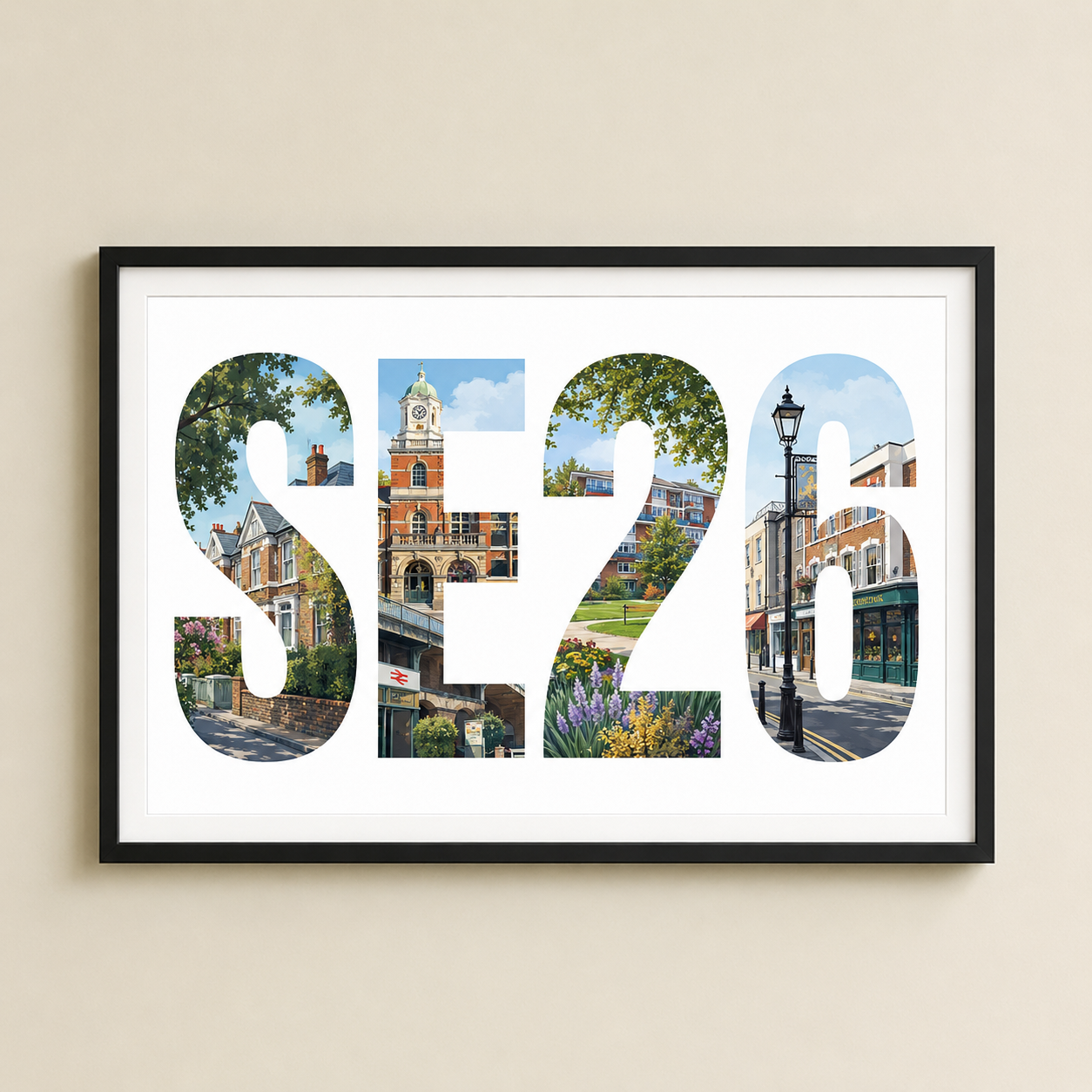
Sydenham Thorpes Estate Agent: SE26 Conservation Homes Guide
Sydenham Thorpes Estate Agent: SE26 Conservation Homes Guide
Choosing a Sydenham Thorpes estate agent is not the same as choosing someone to sell a standard house in SE26. The Thorpes is one of Sydenham’s most recognisable and tightly defined Edwardian residential pockets, where value is shaped by road position, period detail, conservation status, original features, garden layout, school demand, station access, condition and presentation.
The Sydenham Thorpes Conservation Area sits in Lower Sydenham, between Sydenham Road and Mayow Park. Lewisham Council describes it as the Thorpes Estate, an Edwardian development of six roads laid out between 1901 and 1914 by Edmondson and Sons. The estate was designated a conservation area in 2001 because of its consistent townscape, materials, house style and architectural detail. (lewisham.gov.uk)
For sellers, that matters. A home on Bishopsthorpe Road may need a different valuation conversation from one on Queensthorpe Road, Earlsthorpe Road, Dukesthorpe Road, Kingsthorpe Road or Princethorpe Road. A whole Edwardian house, a converted flat, a semi-detached villa, a short terrace and a property backing towards Mayow Park will each attract a different buyer.
This guide explains what makes Sydenham Thorpes property special, why buyers search for homes here, and what sellers should understand before asking for a Sydenham Thorpes property valuation.
Why the Sydenham Thorpes Is Different from Ordinary SE26 Property
The Thorpes is not a loose nickname for a large area. It is a compact Edwardian estate with a strong architectural identity. Lewisham’s conservation material states that the area is tightly drawn around the six roads forming the Thorpes Estate, with the boundary set between Sydenham Road, Mayow Park, Sydenham Station and the surrounding nineteenth- and twentieth-century suburbs. (lewisham.gov.uk)
That compactness is part of the value. Buyers often know when they have entered the Thorpes. The roads feel ordered and consistent. The houses have a clear Edwardian rhythm. Front gardens are shallow, rear gardens are deeper, and the streets have a calm, enclosed quality created by the regular building line, tree planting and repeating house forms.
Lewisham describes the estate’s special character as coming from red brick, white roughcast, multi-paned sash windows, grey slate roofs, decorative pargeting, compact layout, small front gardens and tree-lined streets. (lewisham.gov.uk)
That is why generic property marketing is not enough. A Thorpes home should not be described only as a “period house in a popular location”. The listing should explain the road, the house style, the conservation setting, the original features, the garden, the condition and the practical appeal of Mayow Park and Sydenham station.
A strong Sydenham Thorpes valuation should begin with the exact road and property type, not just the postcode.
The History Behind the Thorpes Estate
The Thorpes was built over land that had once formed part of the garden of the Old House, home of the Mayow family and formerly the centre of Sydenham’s largest private estate. The Ideal Homes archive records that the Thorpe Estate roads were built by Edmondson and Sons between 1901 and 1914 over the garden of the Old House. (ideal-homes.gre.ac.uk)
This history matters because the estate was not built piecemeal without design. It was planned as a coherent Edwardian residential development aimed at comfortable middle-class suburban living. Lewisham’s appraisal describes the Thorpes as a planned development of terraced and semi-detached houses along a regular grid-like road network, calling it a good example of a well-preserved lower-middle-class Edwardian suburb. (lewisham.gov.uk)
That planned character is still clear today. The houses share materials and details, yet each road has its own subtle identity. Some roads have stronger Queen Anne influence. Others show more vernacular or neo-Georgian elements. This is exactly why valuation should be careful and road-specific.
For buyers, the history creates confidence. They are not just buying an old house. They are buying into an Edwardian estate with a defined character and conservation protection.
For sellers, that story should be part of the marketing.
What Buyers Search for in the Sydenham Thorpes
Buyers searching for the Thorpes often use very specific language. Some begin with Sydenham houses for sale or SE26 homes, but once they know the area, their searches become more focused.
They may search for:
Sydenham Thorpes estate agent
Sydenham Thorpes property valuation
Thorpes Conservation Area homes
Bishopsthorpe Road houses
Queensthorpe Road Sydenham
Earlsthorpe Road SE26
Dukesthorpe Road homes
Kingsthorpe Road property
Princethorpe Road Sydenham
Edwardian houses in Sydenham
homes near Mayow Park
houses near Sydenham station
period homes in SE26
A strong local property article should speak to those searches naturally. The goal is not to stuff keywords into the page. The goal is to answer the deeper question behind the search: what makes the Thorpes different, what are the houses like, what affects value, and how should a seller prepare before going to market?
The best content for this area should feel useful to a real homeowner on one of the Thorpes roads, not like a generic suburb guide.
Road-by-Road Appeal in the Sydenham Thorpes
A proper Sydenham Thorpes valuation should begin with the exact road. The six Thorpes roads share a common identity, but buyers still compare them carefully.
The conservation appraisal’s map and contents identify the principal roads as Bishopsthorpe Road, Earlsthorpe Road, Queensthorpe Road, Kingsthorpe Road, Princethorpe Road and Dukesthorpe Road, with Mayow Road also forming part of the conservation-area story. (lewisham.gov.uk)
Bishopsthorpe Road
Bishopsthorpe Road is one of the most important roads in the Thorpes. It has strong name recognition and contains some of the area’s most substantial Edwardian homes. Lewisham’s appraisal notes that houses on Bishopsthorpe Road show a vernacular flavour, with semi-detached groups, sweeping catslide roofs and casement windows set in stone mullions. (lewisham.gov.uk)
That architectural detail matters. Buyers looking here may be especially interested in larger houses, original features, generous accommodation and the relationship with Mayow Park.
Rightmove reports that Bishopsthorpe Road had an overall average sold price of £567,333 over the last year, with flats averaging £562,500 and terraced properties averaging £577,000. Those figures need careful reading because the road includes different property types, and larger houses may sit well outside the simple road average. (rightmove.co.uk)
For sellers, Bishopsthorpe Road marketing should explain house size, original detail, garden, condition, layout, conservation position and proximity to Mayow Park.
Queensthorpe Road
Queensthorpe Road is one of the most visually recognisable Thorpes roads. Ideal Homes includes a historic image of Queensthorpe Road from around 1910 and records that the Thorpe Estate roads were built by Edmondson and Sons between 1901 and 1914. (ideal-homes.gre.ac.uk)
Lewisham’s appraisal states that houses on Earlsthorpe and Queensthorpe Roads show a strong Queen Anne influence, with red brick, roughcast, slate roofs, decorative plasterwork and multi-paned sash windows.
Rightmove reports an overall average sold price of £703,333 for Queensthorpe Road over the last year, with terraced properties averaging £740,000 and flats averaging £630,000.
For sellers, Queensthorpe Road should be marketed around Edwardian character, road rhythm, sash windows, bay detail, garden, room proportions and conservation-area appeal.
Earlsthorpe Road
Earlsthorpe Road is one of the roads where the Thorpes’ Edwardian character can feel especially strong. Lewisham’s appraisal links Earlsthorpe Road with Queen Anne-influenced detailing, including red brick, roughcast, slate roofs, decorative pargeting and small-paned sash window patterns.
Rightmove reports that Earlsthorpe Road had an overall average sold price of £1,182,500 over the last year. As with all road-level price data, this should be treated carefully because low transaction numbers can make yearly averages move sharply.
A home on Earlsthorpe Road should be valued with close attention to house width, condition, original details, garden, extension history, floor area and recent comparable evidence.
Dukesthorpe Road
Dukesthorpe Road has a strong place within the estate’s design story. Lewisham’s appraisal notes vernacular design elements in Dukesthorpe Road, including porches, casement windows, sweeping gables and the use of red brick, roughcast and clay plain tile. ightmove reports that Dukesthorpe Road had an overall average sold price of £875,000 over the last year.
For sellers, Dukesthorpe Road marketing should focus on period character, layout, garden usability, presentation, extension quality and how the house works for modern family life.
Kingsthorpe Road
Kingsthorpe Road is another key Thorpes road. Lewisham’s appraisal groups Kingsthorpe and Princethorpe Roads together when discussing principal villa styles, showing how the roads form part of the area’s planned architectural pattern.
Rightmove reports that Kingsthorpe Road had an overall average sold price of £1,075,000 over the last year. (
For sellers, a Kingsthorpe Road valuation should consider house type, garden depth, interior condition, original features, road position and whether the home is a whole house or converted property.
Princethorpe Road
Princethorpe Road is one of the six Thorpes roads and forms part of the same Edwardian conservation-area setting. Public sold-price records show a mixture of houses and flats on Princethorpe Road, including historic terraced house sales and converted flat sales.
For sellers, Princethorpe Road should not be valued from a broad average alone. The difference between a whole house, a maisonette, a flat conversion and an extended family home can be significant.
Marketing should explain tenure, layout, garden access, condition, original features and conservation context clearly.
Mayow Road and the Sydenham Road Parade
Although the six Thorpes roads form the core identity, Mayow Road and the nearby Sydenham Road parade are also important to the conservation-area story. Lewisham records that in 2007 the conservation area was extended to include the parade of shops lining Sydenham Road to the south, describing them as purpose-built commercial terraces of three storeys plus attics, with red brick, stone dressings and some decorative curved Dutch gables.
This matters because buyers are not only buying a house. They are buying into a walkable local setting with period residential roads, shops, transport and Mayow Park nearby.
The Architecture Buyers Notice
The Thorpes’ architecture is one of the strongest reasons buyers remember the area. Lewisham’s appraisal describes the houses as mainly two-storey semi-detached villas and short terraces, with a regular building line, shallow front gardens, projecting ground floors, porches, bay windows and gables.
The same appraisal notes that the houses mix influences from Queen Anne, neo-Georgian and vernacular styles, creating individuality while maintaining a strong group identity. uyers often respond to:
red brick elevations
white roughcast
decorative pargeting
slate roofs
bay windows
multi-paned sash windows
Venetian-style windows
timber front doors
stained glass
porches
gables
original boundary walls
tiled paths
deep rear gardens
These features are not just attractive. They help define the conservation area.
For sellers, the copy should be specific. “Edwardian charm” is useful, but it is not enough. A better description explains whether the home has original sash windows, stained glass, fireplaces, timber doors, decorative plasterwork, a bay-fronted reception, a cellar, a loft conversion, a side return, a restored front path or an unusually deep garden.
Specific detail helps buyers understand value.
Conservation Area and Article 4 Direction
The Sydenham Thorpes Conservation Area was designated in June 2001. Lewisham’s owner guidance explains that conservation areas are places of special architectural or historic interest where it is desirable to preserve or enhance character or appearance. It also states that within conservation areas, planning controls are more extensive than normal, permitted development rights are limited, and demolition and tree works are controlled.
The Thorpes also has an Article 4 direction. Lewisham says this was introduced to encourage the retention of high-quality architectural features and ensure changes are undertaken sympathetically.
This is one of the most important seller points. The Article 4 guidance explains that much of the estate’s special interest comes from original details such as windows, doors, front boundary walls, roof materials and external finishes. It gives examples of unsympathetic changes, such as replacing timber sash windows with uPVC casements or replacing natural slate roofs with concrete tiles.
For sellers, conservation status can be a strength because it helps protect the character buyers value. But it also makes paperwork and accuracy important.
If a property has had window changes, roof alterations, front boundary changes, extensions, loft works, tree works, satellite dishes, exterior alterations or conversion works, buyers may ask whether the correct permissions were obtained.
A listing should not overpromise development potential. The safest wording is “subject to the necessary consents” or “subject to planning and conservation requirements”.
House Prices in Sydenham, SE26 and the Thorpes
Public price data gives useful context, but it should never be used lazily in the Thorpes.
Rightmove reports that Sydenham has an overall average sold price of £559,025 over the last year. It reports flats averaging £411,907, terraced properties averaging £721,461 and semi-detached properties averaging £757,903.
Rightmove also reports that SE26 has an overall average sold price of £556,519 over the last year, with flats averaging £415,419, terraced properties averaging £733,433 and semi-detached properties averaging £780,250.
Official borough-level data gives another layer of context. The Office for National Statistics reported that the average house price in Lewisham was £490,000 in March 2026, while home-movers in Lewisham paid an average of £605,000. (ons.gov.uk)
These figures are useful, but they cannot replace a proper Thorpes road-by-road valuation. The estate contains whole houses, semi-detached properties, short terraces, flats and conversions. Some roads have very low transaction numbers, meaning annual averages can be affected by only one or two sales.
A proper valuation should consider road, property type, floor area, condition, original features, garden depth, tenure, lease length where relevant, extension history, conservation compliance, station access, school appeal and recent comparable evidence.
In the Thorpes, the story behind the number matters.
What Adds Value to a Sydenham Thorpes Home?
The strongest value drivers in Sydenham Thorpes property are usually period detail, condition, garden, layout, road position, paperwork and buyer confidence.
Original features matter because they help define the estate. Buyers often value sash windows, stained glass, fireplaces, timber doors, old floorboards, decorative plasterwork, bay windows and original front boundaries.
Condition matters because buyers of older homes often balance affection with caution. Roofs, windows, damp, wiring, heating, drainage, brickwork, exterior render, guttering and pointing can all influence confidence.
Garden depth matters because Lewisham’s appraisal notes the Thorpes houses typically have shallow front gardens and deeper rear gardens, helping create the area’s suburban character.
Layout matters because many buyers want a period home that works for modern life. A good kitchen-diner, useful utility area, downstairs WC, home office, loft room, cellar storage or family-friendly garden connection can make a difference.
Conservation paperwork matters because the area has Article 4 controls and conservation status. A seller who can provide documentation for works gives buyers fewer reasons to hesitate.
Tenure clarity matters for converted flats and maisonettes. Lease length, share-of-freehold position, service charges, ground rent and building responsibilities should be clear before marketing.
A beautiful Thorpes home can underperform if the presentation is weak or paperwork is missing. A well-prepared home can stand out quickly because buyers understand exactly what they are looking at.
Transport and Commuter Demand
Transport is a major part of Sydenham Thorpes buyer demand. The Thorpes sits close to Sydenham station, which is served by London Overground’s Windrush line and National Rail services. TfL lists Sydenham Rail Station in Zone 3 on the Windrush route. (tfl.gov.uk)
National Rail lists Sydenham station with ticket machines, help points and staffed assistance across the week. (nationalrail.co.uk)
Journey time is also important. Trainline reports that Sydenham to London Bridge takes around 21 minutes on average, with the fastest services taking around 14 minutes. (thetrainline.com)
For sellers, transport wording should be accurate. A house on one Thorpes road may be closer to Sydenham station than another. A listing should not say “moments from the station” unless the walk genuinely supports that wording.
Better phrases include:
well placed for Sydenham station
within reach of London Overground and National Rail services
convenient for rail links towards London Bridge
suited to buyers balancing Edwardian character with London commuting
Honesty builds trust. Buyers will check the walk themselves.
Mayow Park and Local Lifestyle
One of the Thorpes’ strongest lifestyle advantages is Mayow Park. Lewisham Council lists Mayow Park facilities including a play area, café, outdoor gym, nature reserve, tennis courts, cricket pitch, meadow area and Friends of Mayow Park group. The park also holds a Green Flag Award.
For many buyers, Mayow Park is not just a local amenity. It shapes daily life. It supports school runs, dog walks, weekend sport, children’s play, exercise, café visits and the general sense that the Thorpes is a comfortable place to settle.
The Thorpes benefits from the combination of Edwardian streets, a defined conservation area, access to Sydenham Road shops, nearby rail links and a proper local park.
For sellers, this should be mentioned naturally. The home is not just a house. It sits in a small, walkable part of Sydenham with a clear neighbourhood identity.
Schools and Family Buyer Demand
Family demand is a major part of the Sydenham Thorpes property market. Many buyers look here because they want period homes, gardens, transport, Mayow Park and access to local schools.
Haseltine Primary School, on Haseltine Road in Lower Sydenham, is listed by Ofsted as Good, with its inspection outcome dated 13 March 2023. (reports.ofsted.gov.uk)
Kelvin Grove Primary School, on Kelvin Grove, is also listed by Ofsted as Good, with its inspection outcome dated 7 June 2023.
Sydenham School, on Dartmouth Road, is listed by Ofsted as Good. Its 2022 Ofsted report states that the school continues to be a good school.
School references should always be handled carefully. It is fair to say buyers often consider local schools. It is not wise to imply guaranteed admission. Catchments, admissions rules and school performance information can change, so buyers should check directly with the school or local authority.
For sellers, the family message should focus on practical daily life: school journeys, garden use, park access, home working, storage, station access and long-term flexibility.
How to Prepare a Sydenham Thorpes Home for Valuation
A Sydenham Thorpes valuation should be prepared with care. These homes rely heavily on character, condition and buyer confidence.
Start with the frontage. In the Thorpes, front gardens, boundary walls, timber gates, paths, sash windows, brickwork, roughcast and roof materials all contribute to the streetscape. A tired frontage can weaken the first impression before the buyer enters the house.
Prepare the garden. Many Thorpes homes have deeper rear gardens, and a good garden can be a major selling point. Cut back overgrown planting, clear old furniture, define seating areas and make the connection between the house and garden easy to understand.
Inside, focus on light and flow. Period homes should show their proportions clearly. Bay windows should not be blocked. Fireplaces, stained glass, doors and floorboards should be visible where they add character. If a kitchen extension or loft conversion has improved the layout, explain that carefully.
Prepare paperwork early. Useful documents may include:
planning permissions
building control certificates
completion certificates
conservation-area consents
Article 4-related permissions where relevant
tree-work permissions
window and roof guarantees
boiler service records
electrical certificates
damp or structural reports
lease or share-of-freehold documents for flats
service-charge and building-maintenance details
Good paperwork reduces doubt. Reduced doubt can help protect the sale once an offer is accepted.
Common Mistakes Sydenham Thorpes Sellers Should Avoid
One common mistake is relying only on the Thorpes name. The area has strong appeal, but buyers still compare value carefully.
Another mistake is using broad SE26 or Sydenham averages to set a price. The Thorpes needs road-level and property-specific judgement.
A third mistake is underplaying original features. If a home has sash windows, stained glass, fireplaces, timber doors, pargeting, original front boundaries or old tiled paths, those details should be brought into the story.
Some sellers fail to prepare conservation paperwork. This can slow the sale later, especially where windows, roofs, front boundaries, extensions or loft works have been changed.
Another mistake is overstating future potential. In a conservation area with Article 4 controls, potential should always be described carefully.
Poor photography can also weaken a launch. A Thorpes home needs photography that explains the frontage, architectural detail, room proportions, garden, light and road setting.
Finally, sellers should avoid generic copy. A Sydenham Thorpes listing should explain why this particular road, house and conservation setting matter.
What Should a Proper Sydenham Thorpes Valuation Include?
A proper Sydenham Thorpes property valuation should look at the whole property, not just recent sales.
It should consider the exact road and the property’s position within the Thorpes.
It should assess house type, floor area, condition, layout, original features, garden depth, frontage and road setting.
It should review planning history, conservation requirements, Article 4 considerations, window changes, roof works, tree works and building-control documents.
It should examine tenure, lease length, share-of-freehold status and service-charge arrangements where the property is a flat or maisonette.
It should compare recent sales carefully, giving more weight to homes that match the subject property by road, house type, size, condition, garden, tenure and presentation.
It should also identify the likely buyer. A Thorpes home may appeal to a family moving within Sydenham, a buyer priced out of nearby areas, someone looking for an Edwardian house near a station, a buyer wanting a character flat with garden access, or a London mover looking for more space without losing transport links.
Most importantly, the valuation should explain the reasoning. A seller should understand not only the suggested price, but why that price is realistic and how the marketing will support it.
FAQs About Selling in the Sydenham Thorpes
What is the Sydenham Thorpes Conservation Area?
The Sydenham Thorpes Conservation Area is a compact Edwardian estate in Lower Sydenham, made up of six roads laid out between 1901 and 1914 by Edmondson and Sons. Lewisham Council designated it a conservation area in 2001 because of its special architectural and townscape character.
Which roads make up the Sydenham Thorpes?
The core Thorpes roads are Bishopsthorpe Road, Earlsthorpe Road, Queensthorpe Road, Kingsthorpe Road, Princethorpe Road and Dukesthorpe Road. Mayow Road and the Sydenham Road parade also form part of the wider conservation-area story.
Who built the Thorpes Estate?
The Thorpes roads were built by Edmondson and Sons between 1901 and 1914 over the garden of the Old House, once home to the Mayow family and the centre of Sydenham’s largest private estate.
What type of homes are common in the Thorpes?
The Thorpes is known for Edwardian terraced and semi-detached homes, many with red brick, roughcast, slate roofs, sash windows, bay fronts, porches, gables, decorative pargeting, shallow front gardens and deeper rear gardens. (
Does the Article 4 direction affect selling a Thorpes home?
It can. Lewisham introduced an Article 4 direction to help protect original architectural features and ensure changes are made sympathetically. Sellers should prepare paperwork for relevant changes to windows, roofs, doors, front boundaries, extensions or other external works.
What adds value to a Sydenham Thorpes home?
The strongest value drivers are usually road position, house type, original features, condition, garden depth, layout, extension quality, conservation compliance, station access, school appeal and buyer confidence.
Which station do Thorpes buyers use?
Many buyers use Sydenham station, depending on the exact road. TfL lists Sydenham Rail Station in Zone 3 on the Windrush line, and Trainline reports Sydenham to London Bridge journey times from around 14 minutes on the fastest services. (tfl.gov.uk)
Is Mayow Park important to buyers?
Yes. Mayow Park is a major local amenity. Lewisham Council lists facilities including a play area, café, outdoor gym, nature reserve, tennis courts, cricket pitch and meadow area.
Are schools important to Sydenham Thorpes buyers?
Yes. Family buyers often consider nearby schools including Haseltine Primary School, Kelvin Grove Primary School and Sydenham School, while checking admissions arrangements directly with the relevant school or local authority. (reports.ofsted.gov.uk)
Should I rely on an online valuation for a Thorpes home?
An online valuation can give a rough starting point, but it cannot properly judge Edwardian detail, road position, conservation requirements, garden depth, original features, conversion quality, tenure, buyer demand and comparable evidence for a specific Thorpes property.
What should I prepare before a Sydenham Thorpes valuation?
Prepare documents for planning, building control, conservation matters, Article 4-related works, windows, roofs, extensions, tree works, heating, electrics, damp reports, guarantees and lease documents where relevant. Then review the home as a buyer would: frontage, entrance, light, layout, period features, garden and general condition.
Conclusion
The Sydenham Thorpes is one of SE26’s most distinctive Edwardian residential pockets. Its appeal comes from more than period houses alone. It comes from six carefully planned roads, conservation-area status, architectural consistency, original details, tree-lined streets, Mayow Park, Sydenham station and a compact neighbourhood identity that buyers remember.
For sellers, that means valuation and marketing need to be precise. A Thorpes home should not be reduced to bedroom count and floor area. The right campaign should explain the road, the house style, the frontage, the garden, the condition, the conservation position, the school and transport context, and the reason buyers search for this estate by name.
A strong launch starts with proper local understanding. Before setting an asking price, make sure the valuation looks beyond the obvious and considers the details that Sydenham Thorpes buyers truly care about.
Thinking of selling a Sydenham Thorpes home? Ask for a road-by-road valuation that considers your property’s setting, Edwardian character, condition, garden, conservation position, Article 4 requirements, school appeal, station access and recent comparable sales.
Contact us at 0203 870 00 00
How much is your property worth?
Get your property valued by a local expert
Get A Valuation
-1.png)
.jpg)
.jpg)
.jpg)

Blogs
Loading photographs…
Let's Talk
If you want to discuss your property, plans for the future, or just want some friendly advice. There'll be no pressure, Just equal measures of common sense and expert advice to point you in the right direction.
Get In Touch